
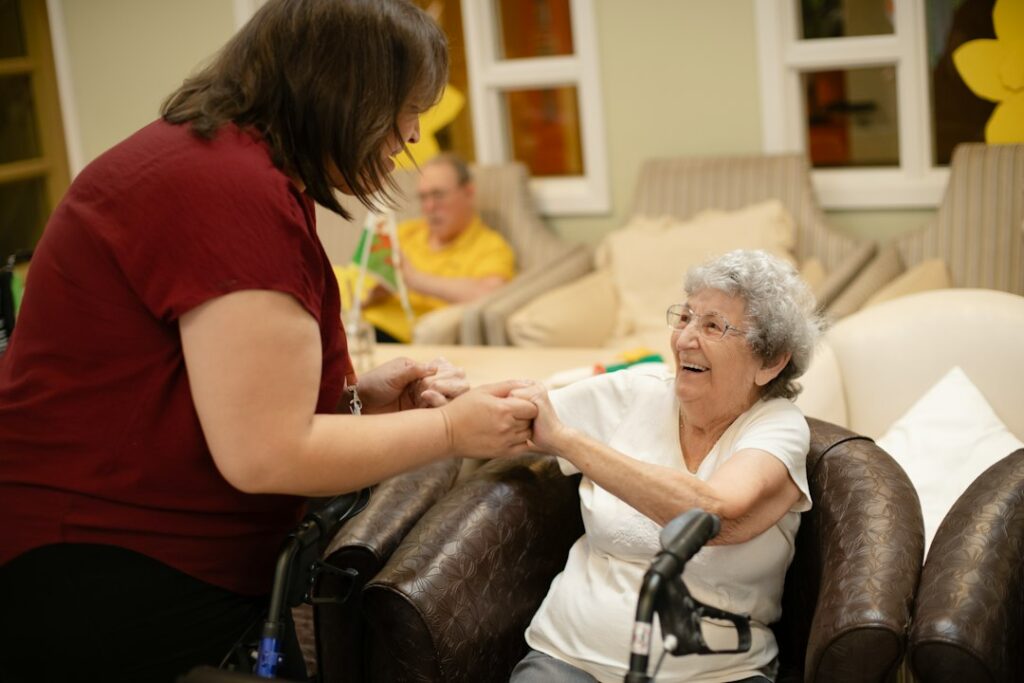
Why should family members attend assisted living events?
Family members who attend activities, meals, educational programs, and celebrations can better understand a resident’s daily life and provide meaningful support. Participation is usually most helpful when it is guided by the resident’s preferences rather than by an expectation that every event must be attended.
Assisted living events may include:
- Group exercise or movement sessions
- Music, crafts, games, and discussion groups
- Educational talks about health, safety, or aging
- Seasonal celebrations and cultural programs
- Shared meals, baking, or gardening activities
- Faith-based or reflective gatherings
- Outings and indoor alternatives during poor weather
- Family nights and resident-led programs
For families in Zelienople, seasonal conditions may affect attendance and transportation. Winter ice, summer heat, and changing daylight can make indoor events more practical for some residents. A family member may be able to participate by visiting in person, joining part of an event, or helping the resident prepare for an activity.
How can a family member choose the right events?
The right event is usually one that matches the resident’s interests, energy level, communication style, and comfort with groups. A resident who enjoys conversation may prefer a discussion group, while someone who becomes tired easily may do better with a shorter activity or a quiet visit.
Ask the resident questions such as:
- “What sounds enjoyable this week?”
- “Would you rather attend a group or spend time together privately?”
- “Is there anything you tried recently that you would not want to repeat?”
- “Would you like help getting ready or getting to the activity?”
- “Would you like me to participate, observe, or visit afterward?”
The schedule can also be reviewed for timing. Some residents are more alert in the morning, while others engage more comfortably later in the day. Events scheduled near meals, medication times, therapy, or rest periods may not be the best fit, even if the subject is appealing.
Should family members participate or simply observe?
Either approach can be appropriate. Some residents enjoy having a relative join a game, craft, exercise session, or discussion. Others may feel watched, interrupted, or treated like a child when family members become too involved.
Before an event, clarify what the resident wants. During the activity, follow the resident’s lead. Avoid answering every question for the resident, correcting small mistakes, or directing the person’s choices unless help is requested or safety requires it.
A useful role may be to:
- Sit nearby without taking over
- Offer encouragement without pressure
- Help with materials or mobility when invited
- Introduce the resident to another participant
- Join a familiar activity while allowing the resident independence
- Leave quietly if the resident becomes tired or uncomfortable
The goal is connection, not performance. A resident does not need to appear cheerful, social, or highly involved for the visit to be worthwhile.
How can family members make events more comfortable?
Preparation can reduce stress. Some residents need extra time to dress, use the restroom, gather hearing devices, or move safely to another room. Rushing can turn a pleasant event into a frustrating experience.
Before leaving the resident’s room or apartment, consider:
- Comfortable clothing suited to the temperature
- Glasses, hearing aids, mobility devices, or communication tools
- A sweater for cool indoor spaces
- Water if permitted and needed
- A reminder of the event’s location and expected length
- Whether the resident wants to sit near an exit, restroom, or quieter area
Noise and crowding can also affect participation. If the room is busy, select a seat with a clear view and enough personal space. Family members should watch for signs of fatigue, pain, confusion, overstimulation, or anxiety.
A resident may enjoy the first 20 minutes of an event but not have the energy to stay for the entire program. Leaving early is not necessarily a failure. Short, positive participation may be more beneficial than remaining until the resident is exhausted.
What if the resident refuses to attend?
Refusal should be taken seriously rather than treated as stubbornness. The resident may be tired, uncomfortable, embarrassed, worried about a new group, or experiencing a change in health. Sometimes the event itself is not the problem; the timing, noise, transportation, or unfamiliar setting may be.

Respond calmly and ask a simple follow-up question: “Would you rather rest, visit quietly, or try something different later?” Avoid arguing or repeatedly persuading the resident.
If refusal is new, frequent, or connected to noticeable changes in mood, memory, appetite, walking, sleep, or communication, share the observation with the appropriate care team. A pattern may indicate that the resident needs a health review, a schedule adjustment, or a different type of activity.
How can family members respect privacy and community boundaries?
Assisted living events often take place in shared spaces, which means residents may have different preferences about photographs, conversation, and physical assistance. Family members should avoid taking pictures or recording other residents without clear permission.
Privacy also matters during conversations. Sensitive topics involving health, finances, family disagreements, or personal care should be discussed privately rather than at a group table or public activity.
Visitors should also follow posted safety procedures and event expectations. These may involve hand hygiene, staying home when sick, respecting quiet hours, or asking before bringing food for others. Seasonal respiratory illnesses can spread easily in shared living environments, so postponing a visit when experiencing fever, significant coughing, vomiting, or other contagious symptoms protects residents and staff.
How can participation help family members understand daily life?
Events offer a view of the resident’s social environment that may not be apparent during a brief private visit. A family member may learn which activities create enjoyment, which settings cause stress, and which friendships or routines matter to the resident.
Pay attention to practical details:
- Does the resident find the room easy to navigate?
- Can the resident hear and follow the program?
- Does the activity allow enough time for slower movement or communication?
- Does the resident appear included by others?
- Is the resident able to leave or request help when needed?
- Does the resident seem more energized or more fatigued afterward?
These observations can support respectful conversations with the resident and, when appropriate, with staff. Share specific facts rather than broad judgments. “The room seemed difficult to hear from the back” is more useful than “The event was not accessible.”
What can families do if they cannot attend in person?
Participation does not always require physical presence. A family member might help the resident choose an event during a phone call, send a short note connected to a program, or arrange a visit before or after an activity.
Other options include:
- Asking the resident to describe the event afterward
- Looking at a printed activity calendar together
- Practicing conversation topics before a social gathering
- Sending a familiar recipe for a supervised cooking activity
- Marking birthdays, holidays, or personal milestones privately
- Visiting during a quieter time if large events are overwhelming
The resident’s preferences should remain central. Some people appreciate regular involvement from relatives, while others prefer family visits to remain separate from their organized activities.
How should family members evaluate whether participation is helping?
A helpful event generally leaves the resident feeling respected, safe, and reasonably comfortable, even if the person is tired afterward. Watch for repeated signs of distress, withdrawal, frustration, or physical discomfort.
Afterward, ask open-ended questions rather than seeking praise: “What was the best part?” “Was anything difficult?” or “Would you want to do something like that again?” The answers can guide future choices.
Family involvement works best as an ongoing conversation. Residents’ interests, abilities, health needs, and social preferences may change over time. Remaining flexible allows event participation to stay supportive rather than becoming another obligation.
