
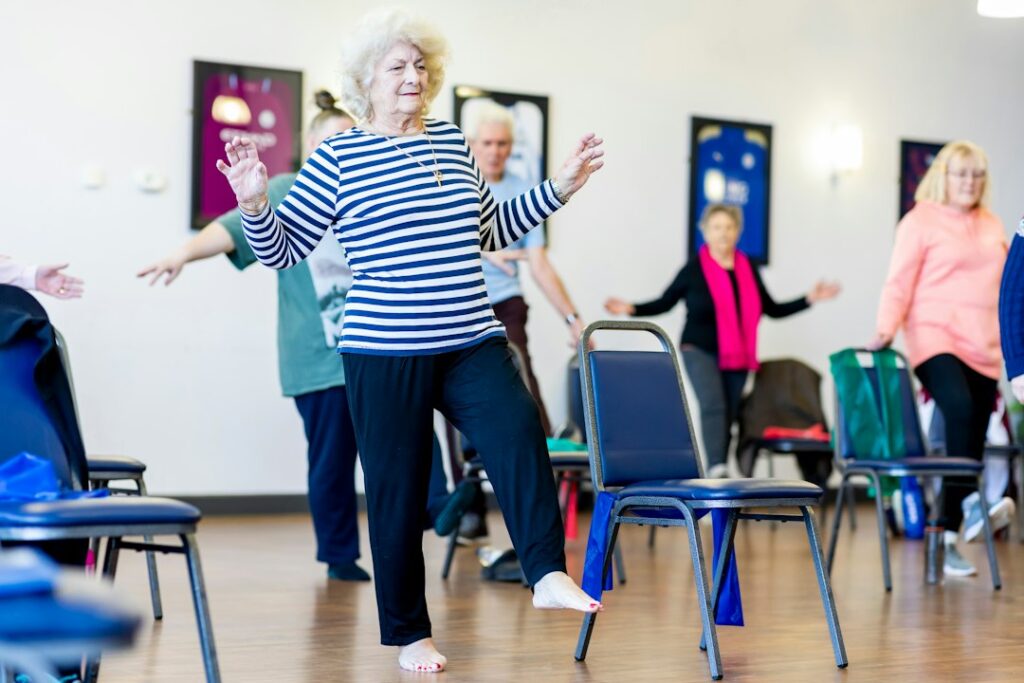
What should a senior fitness program in assisted living include?
A well-designed fitness program for seniors should support strength, balance, flexibility, endurance, and confidence with everyday movement. It should also be adaptable, enjoyable, and safe for people with different health conditions and mobility levels.
In assisted living, exercise is usually most effective when it is built into a regular routine rather than treated as an occasional event. Programs may include seated exercises, standing activities, walking, stretching, light resistance training, and balance practice. The goal is not athletic performance. The goal is helping residents move more comfortably and maintain as much independence as possible.
A typical program may address:
- Leg and hip strength for standing, walking, and getting into a chair
- Upper-body strength for dressing, grooming, and using mobility devices
- Balance and coordination to reduce the risk of falls
- Flexibility for reaching, turning, and maintaining comfortable posture
- Endurance for walking through hallways, participating in activities, or completing daily routines
- Breathing, relaxation, and body awareness
Are exercise programs safe for older adults?
Exercise can be safe for many older adults when activities are matched to individual ability and health needs. Safety depends on appropriate supervision, a suitable pace, stable equipment, clear walking areas, and adjustments for medical conditions.
Residents should be encouraged to share relevant information about pain, dizziness, shortness of breath, recent falls, joint limitations, heart conditions, osteoporosis, or changes in vision. A person who has been inactive for a long period may need to begin with brief, low-intensity sessions.
Exercise should stop if a resident experiences chest pain, severe shortness of breath, faintness, unusual confusion, sudden weakness, or sharp pain. These symptoms require prompt attention. Mild muscle tiredness can be normal, but persistent pain or a noticeable decline in function should not be ignored.
Safety also includes the physical setting. Floors should be free of clutter, chairs should be stable, lighting should be adequate, and residents should have access to mobility aids when needed. Footwear should fit securely and provide good traction.
What types of exercises work well in assisted living?
Different forms of movement serve different purposes. A balanced program generally combines several types rather than relying on a single class.
Seated exercise can be useful for residents who have limited standing tolerance, use wheelchairs, or are rebuilding strength after illness. Movements may include ankle pumps, knee extensions, seated marching, arm reaches, gentle torso turns, and hand exercises.
Strength training does not require heavy weights. Light hand weights, resistance bands, or body-weight movements can support muscles used in daily activities. Repeatedly standing from a sturdy chair, for example, can help build lower-body strength when performed safely.
Balance activities may include supported weight shifts, heel-to-toe positioning, controlled side steps, or standing behind a stable chair. These activities should be adjusted for each resident’s fall risk and should not require anyone to stand unsupported if that is unsafe.
Walking programs may take place indoors, especially during icy, wet, or very hot weather. Short walks with planned rest periods can be more practical than one long session. Walking routes should allow residents to turn around easily and sit down when needed.
Flexibility and mobility exercises may focus on the shoulders, neck, hips, ankles, and back. Gentle range-of-motion movements can help residents maintain comfort during dressing, bathing, transfers, and other daily tasks.
How often should seniors exercise?
Many older adults benefit from movement on most days, but the amount and intensity should reflect individual health, stamina, and goals. A resident may begin with five- to ten-minute activity periods and gradually participate for longer as tolerated.
A weekly routine might include:
- Gentle movement or stretching most days
- Strength exercises on two or more days, if appropriate
- Balance practice several times each week
- Walking or another endurance activity in short, manageable periods
Consistency matters more than intensity. A resident who participates in brief activities several times per week may gain more practical benefit than someone who attempts a demanding session and becomes exhausted or discouraged.
Rest is part of a healthy program. Residents may need additional recovery after illness, poor sleep, medication changes, or unusually demanding activities.
Can residents with arthritis, memory loss, or limited mobility participate?
Often, yes. Fitness programs can be modified for arthritis, dementia, weakness, stroke-related limitations, Parkinson’s disease, vision changes, or the use of walkers and wheelchairs.

For arthritis, gentle movement may be more comfortable after the body has warmed up. Activities should avoid forcing painful joints through a large range of motion. For memory loss, familiar routines, simple instructions, music, demonstrations, and repetition can make participation easier.
Residents with limited mobility may benefit from seated strength work, assisted standing, hand and arm movements, breathing exercises, or short supported walks. A person does not have to walk independently to participate in meaningful physical activity.
Instructions should be clear and brief. Demonstrating one movement at a time is often more effective than explaining a long series of steps. Encouragement should focus on participation and personal progress rather than comparison with other residents.
What should families ask about a fitness program?
Families can ask how activities are adapted for different abilities and how staff respond when a resident becomes tired, unsteady, or uncomfortable. It is also reasonable to ask whether participation is voluntary, how attendance is documented, and how changes in mobility are communicated.
Useful questions include:
- Are seated and standing options available?
- How are fall risks identified during activities?
- Can residents participate with walkers or wheelchairs?
- Are exercise times adjusted during illness or extreme weather?
- How are personal goals identified?
- What happens if a resident reports pain or dizziness?
- Are activities connected to daily tasks such as transfers, walking, or dressing?
A strong program should respect individual choice. Some residents may prefer quiet stretching, while others may enjoy group movement, music, or walking conversations. Offering options can make exercise more welcoming and sustainable.
How does seasonal weather affect activity in Zelienople?
Residents in Zelienople, PA may encounter changing conditions across the year, including cold temperatures, wet surfaces, and periods when outdoor walking is less comfortable. Assisted living fitness routines should include indoor alternatives so residents are not dependent on favorable weather.
Indoor hallways, activity rooms, and common areas can support walking, chair exercises, stretching, and balance work when outdoor paths are slippery or uncomfortable. During warmer periods, hydration, ventilation, lighter activity, and scheduled rest become more important.
Weather-related changes should not mean that residents stop moving altogether. A shorter indoor session may be a safer substitute for outdoor exercise on a day with ice, heavy rain, or excessive heat.
What makes a fitness program successful?
A successful program is regular, adaptable, and connected to real-life needs. Residents are more likely to participate when activities are offered at comfortable times, explained clearly, and adjusted without embarrassment.
The most useful measure may be functional improvement: standing with less assistance, walking farther without tiring, reaching for clothing, transferring more safely, or feeling more confident during daily routines.
Fitness in assisted living is not limited to formal classes. Safe walking, practicing transfers, stretching before activities, gardening movements, and active recreation can all contribute to a resident’s physical well-being. The best routine is one that respects medical needs, supports independence, and gives each resident a realistic way to keep moving.
