

What does assisted living do to support senior mobility?
Assisted living promotes senior mobility by combining safe daily movement, accessible surroundings, assistance with personal tasks, and opportunities to stay active. The goal is not simply to help residents get from one room to another. It is to preserve strength, balance, confidence, and independence as much as possible.
Mobility needs vary widely. One resident may walk independently but need better lighting or a rest area. Another may use a cane, walker, wheelchair, or mobility scooter. A thoughtful assisted living setting adjusts support to the individual rather than assuming that every older adult needs the same level of help.
For families in Zelienople, PA, this can be especially relevant during seasons when snow, ice, rain, or uneven outdoor surfaces make walking more difficult. A safe indoor environment and dependable assistance can help residents remain active even when outdoor conditions are less favorable.
How does daily movement help older adults?
Regular movement helps maintain the abilities used for everyday life, including standing from a chair, walking to meals, getting dressed, and using the bathroom safely. It may also support joint flexibility, circulation, endurance, and confidence.
Assisted living can build movement into ordinary routines rather than treating exercise as a separate activity. Examples include:
- Walking to dining areas instead of remaining in a room for every meal
- Standing during parts of an activity or gathering
- Taking short hallway walks with rest breaks
- Participating in seated stretching or balance exercises
- Practicing safe transfers between a bed, chair, and standing position
- Helping with simple tasks that encourage reaching, walking, or changing position
These small movements may be more realistic and sustainable than a demanding exercise program. For someone with arthritis, fatigue, neurological changes, or a history of falls, consistent low-intensity activity can be more useful than occasional strenuous exercise.
What kinds of mobility activities may be available?
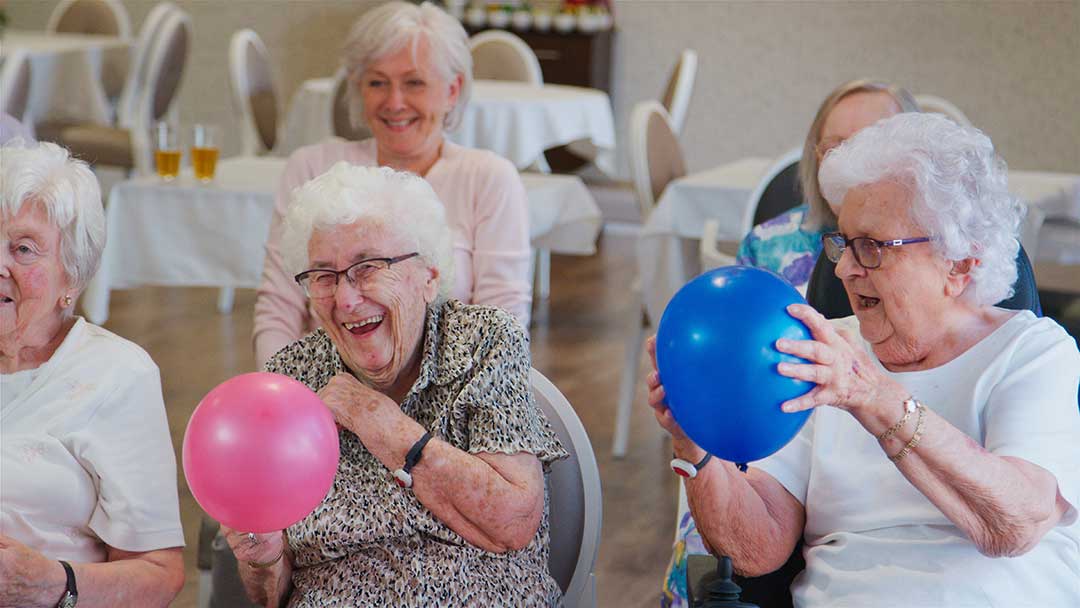
Activities differ by residence and by the abilities of the people taking part. Common options include walking groups, seated exercise, gentle strength training, stretching, balance practice, dance or music-based movement, and supervised outdoor time.
Some programs focus on functional mobility. Instead of emphasizing athletic performance, they practice movements that residents use throughout the day. A session might include:
- Rising from a chair several times with support as needed
- Stepping around objects to improve coordination
- Reaching for items at different heights
- Turning safely while walking
- Practicing how to use a walker or other assistive device
- Building tolerance for standing during grooming or meal preparation
Activities should be adapted for medical conditions and energy levels. A resident who cannot participate in a standing class may still benefit from seated leg movements, upper-body exercises, breathing activities, or guided range-of-motion exercises.
How do assisted living buildings make movement safer?
The physical environment can either support mobility or create unnecessary obstacles. Assisted living settings commonly use wider pathways, handrails, elevators, accessible bathrooms, non-slip flooring, and seating areas where residents can pause.
Good lighting is particularly important. Glare, shadows, and dim hallways can make it harder to see floor changes, furniture, or other people. Clear routes also reduce the need to step around clutter or carry items while walking.
Bathrooms and bedrooms deserve close attention because many falls occur during transfers or nighttime trips. Helpful features may include:
- Grab bars placed where they can support actual movement
- Raised or accessible toilets
- Shower seating and handheld shower equipment
- Adequate space for a walker or wheelchair
- Bed heights that make standing easier
- Night lighting between the bed and bathroom
- Emergency call systems that can be reached from the floor
Environmental safety does not eliminate fall risk, but it can reduce avoidable hazards and make movement more predictable.
Can staff assistance improve independence rather than reduce it?
Yes. Appropriate assistance can help residents complete activities safely while still doing as much as they can for themselves. The key is matching the amount of help to the person’s current ability.
Too little assistance may lead to falls, exhaustion, or fear of movement. Too much assistance may cause unnecessary dependence and reduced use of strength. For example, a resident who can stand with a handrail may benefit from supervision rather than being lifted or moved without participating.
Staff may help with:
- Walking to meals or activities
- Transfers from beds and chairs
- Navigating unfamiliar areas
- Carrying objects that would make walking unsafe
- Using mobility equipment correctly
- Taking rest breaks before fatigue becomes a safety problem
- Responding if a resident feels dizzy, weak, or unsteady
Mobility support should also respect dignity. Explaining what will happen, allowing adequate time, and asking before providing physical help can make movement feel less stressful.
How are mobility needs identified and updated?
Mobility needs can change after an illness, fall, hospitalization, medication change, pain flare, or period of inactivity. Assisted living teams may monitor how a resident walks, transfers, uses equipment, and manages daily routines.
Important observations may include:
- New shuffling, limping, or hesitation
- Increased reliance on furniture for support
- Difficulty rising from a chair
- More frequent fatigue or shortness of breath
- Changes in balance or coordination
- Fear of walking in certain areas
- Trouble remembering how to use a walker or wheelchair
- A noticeable reduction in participation
A change does not always mean that a resident needs a higher level of care. It may indicate that the environment, routine, equipment, or activity plan needs adjustment. Medical concerns such as sudden weakness, fainting, severe dizziness, or a new inability to walk require prompt clinical attention.
What role do assistive devices play?
Canes, walkers, wheelchairs, grab bars, transfer poles, and other devices can make movement safer when they are properly selected and used. They are not signs that a resident has failed to remain independent. In many cases, the right device allows a person to keep walking or participating in activities.
However, an assistive device can create risk if it is the wrong height, poorly maintained, used inconsistently, or placed out of reach. Residents and families should understand how the device is intended to be used and whether it matches the person’s current balance and strength.
Footwear also matters. Secure shoes with stable soles are generally safer for walking than loose slippers, socks on smooth floors, or shoes with worn tread. Clothing should not drag on the floor or interfere with stepping.
How can families encourage safe mobility?
Families can support mobility by focusing on regular participation rather than pushing for speed or distance. Helpful questions include:
- Does the resident feel safe walking to meals or activities?
- Is there a time of day when movement is easier?
- Which surfaces or situations cause hesitation?
- Has the resident had a recent fall or near-fall?
- Is pain limiting participation?
- Does the current cane, walker, or wheelchair still fit the resident’s needs?
- What movement does the resident enjoy?
Visits can include a short walk, seated exercises, or participation in a routine activity, provided the resident is comfortable and the setting allows it. Encouragement should not become pressure. Fear, pain, or fatigue may signal a need to reassess the plan.
Mobility is also affected by hydration, nutrition, sleep, vision, hearing, medication effects, and mood. A resident who suddenly stops walking may be experiencing more than a motivation problem. Changes should be shared with the appropriate care team so potential causes can be considered.
What should residents ask when comparing assisted living options?
Residents and families can ask specific questions about how movement is supported:
- Are mobility assessments completed when residents move in and when needs change?
- What exercise or activity options are available for different ability levels?
- How are residents assisted with transfers and walking?
- Are outdoor areas accessible during changing weather?
- What happens if a resident has a fall or becomes less steady?
- Can personal mobility equipment be accommodated safely?
- How are nighttime trips to the bathroom handled?
- Are residents encouraged to do tasks independently when it is safe?
- How are families informed about significant changes in mobility?
The strongest answers will describe daily practices rather than relying only on broad statements about wellness or safety.
Assisted living cannot prevent every fall or stop every mobility change. Its practical value is in creating routines, surroundings, and support systems that help older adults move as safely and independently as their health allows.
